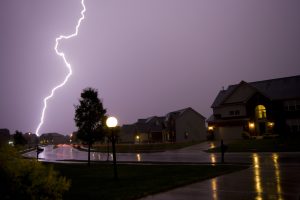
Northern Illinois is in the middle of one of the worst storm seasons recorded. A single August 2026 storm knocked out power to more than 280,000 customers, and ComEd has warned its service area has already seen more storms in 2026 than in all of 2025. Every outage carries a risk most homeowners overlook: the power surge that hits when electricity is restored.
Whole home surge protection is one of the most straightforward ways to protect your home. Here’s what you need to know.
Surge Protection At a Glance:
- A whole-home surge protector installs at your electrical panel and diverts excess voltage to the ground before it reaches your outlets, appliances, or electronics.
- According to the Insurance Information Institute, the average lightning-related homeowners insurance claim cost $26,616 in 2025, a 43 percent increase from the prior year.
- Power strips only protect the devices plugged into them, leaving your HVAC, refrigerator, and all hardwired appliances completely unprotected.
- Many surges don’t come from storms at all. Large appliances like HVAC systems and refrigerators create internal surges every time they cycle on and off.
- A professionally installed whole-home surge protector costs $300 to $700, making it one of the highest-value electrical upgrades available for the price.
What a Power Surge Is and Where It Comes From
A power surge happens when voltage spikes above the normal level flowing through your home’s wiring. That spike can last a fraction of a second, but it’s enough to damage or destroy anything connected to your electrical system.
External surges come from outside your home. Lightning striking nearby can send a massive voltage spike through utility lines. Grid fluctuations, utility switching events, and power restores after outages are also common culprits. That last one is especially relevant right now: when power restores after a large outage, the resulting surge can be significant.
Internal surges are less dramatic but happen far more often. Every time your HVAC system or refrigerator cycles on, it creates a small voltage spike. These happen dozens of times a day and gradually degrade the internal components of your electronics. Your devices don’t fail all at once; they just stop working reliably earlier than they should.
Do power surges only happen during storms?
No. Internal surges from large appliances cycling on and off happen constantly, regardless of the weather. Storms are the most dramatic source, but everyday appliances create small surges that add up over time.
How a Whole-Home Surge Protector Works
A whole-home surge protector installs directly at your electrical panel. It monitors incoming voltage and, the moment it detects a spike, diverts that excess energy safely to the ground wire before it can travel through your home’s circuits.
The device uses components called metal oxide varistors, which sense excess voltage and redirect it almost instantaneously. Think of it as a pressure relief valve for your electrical system: when the pressure gets too high, it redirects the excess somewhere safe instead of letting it push through to everything connected downstream.
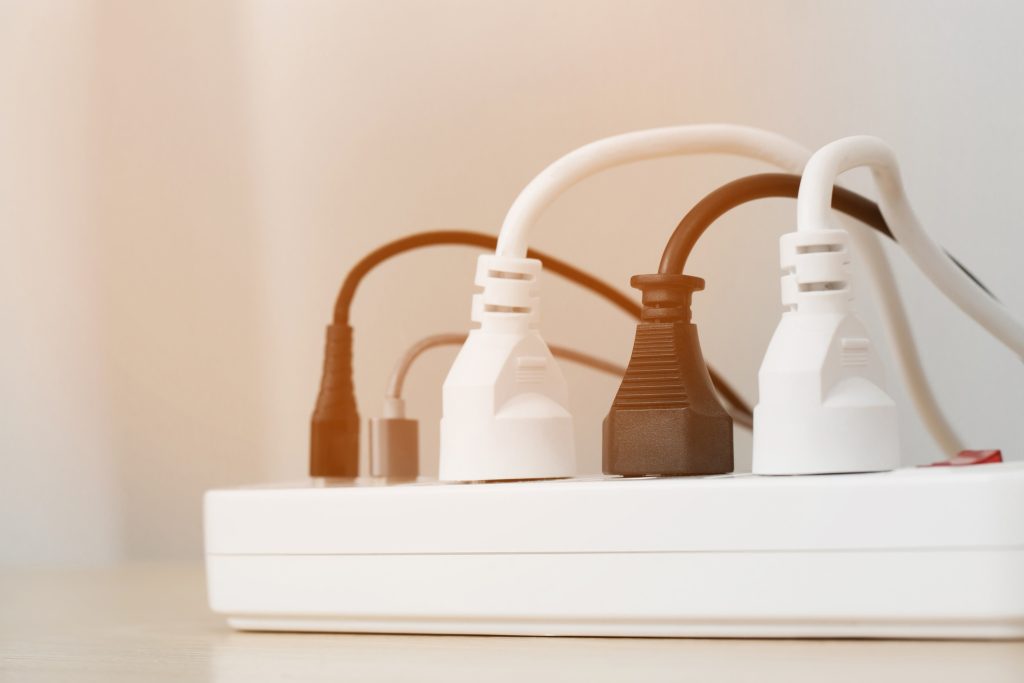
Unlike a power strip, which only protects what’s plugged into it, a whole-home surge protector works at the source. Everything connected to your panel is protected.
What It Protects That a Power Strip Can’t
Power strips protect the devices physically plugged into them. Everything else in your home gets no protection at all.
Think about what isn’t plugged into a power strip: your HVAC system, refrigerator, dishwasher, washer, dryer, and hardwired smart home devices. A new HVAC control unit can cost $5,000 or more. A refrigerator runs $1,500 to $2,000. Your home office or home theater setup can add another $2,000 to $3,000. One surge can take out multiple systems at once, and most homeowners don’t think about it until they’re filing a claim.
If I have power strips, do I still need a whole-home surge protector?
Yes. Power strips can’t protect your HVAC, refrigerator, or anything hardwired. A whole-home device covers your entire electrical system. The two work together: the whole-home protector handles large surges at the panel, while power strips add a secondary layer for individual high-value devices.
Why Professional Surge Protector Installation Matters
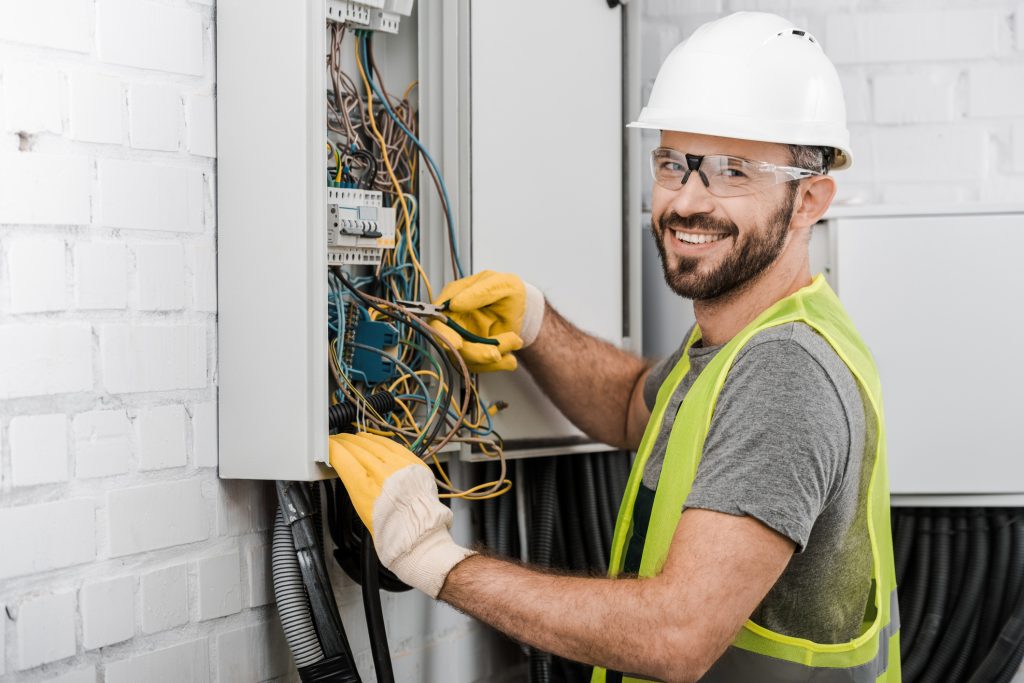
A whole-home surge protector is installed inside your electrical panel by a licensed electrician. It connects to your panel’s main lugs, requires proper grounding to divert excess voltage safely, and needs to be compatible with your panel’s age and capacity. An improperly installed or undersized device won’t perform correctly, and you may not find out until after a surge has caused damage.
There’s also a warranty consideration most homeowners miss. Most manufacturers only honor warranty claims for appliance and electronics damage if a licensed electrician installs the device. Install it yourself, and you may have no recourse if a surge damages your electronics.
Nu-Trend’s licensed electricians handle whole-home surge protector installation from start to finish, including device selection, grounding, and panel compatibility checks.
Fall Storm Season Is Here. Don’t Wait for a Surge to Act.
The math is simple. A professionally installed whole-home surge protector runs $300 to $700. One surge that takes out your HVAC and a few appliances can easily cross $10,000.
With fall storms still ahead and ComEd warning of an unprecedented season, now is the right time to schedule your whole-home surge protection installation.
FAQs: Whole-Home Surge Protection
Does a whole-home surge protector protect against lightning?
Yes, but with an important distinction. It protects your electrical system from the voltage spike that travels through utility lines when lightning strikes nearby. It’s not a lightning rod and won’t prevent a direct strike to your home’s structure. For the best protection, pair a whole-home device at the panel with point-of-use surge protectors for high-value electronics.
How long does a whole-home surge protector last?
Most last 5 to 10 years under normal conditions. After absorbing a large surge, the device may need replacing sooner. Many models have indicator lights that signal when protection has been depleted. A licensed electrician can check it during a routine electrical inspection and let you know if it’s time for a new one.
Will my homeowner’s insurance cover surge damage without a whole-home surge protector?
It depends on your policy. Some cover surge damage from a direct lightning strike, but many exclude internal surges or grid fluctuations. Even when coverage applies, you’re still subject to your deductible, and the average 2025 claim ran $26,616. A whole-home surge protector is a far cheaper way to prevent the damage in the first place.
Protect Your Home Before the Next Storm Hits
Our licensed electricians serve homeowners across Schaumburg, Naperville, Barrington, Elk Grove Village, Buffalo Grove, Palatine, Northbrook, and the surrounding North Chicago suburbs. A whole-home surge protector is one of the fastest installs we do; most jobs are done in under two hours.
Call us at (847) 882-1888 or contact us online to get yours scheduled before fall storm season peaks.